

Where the Money Is: Catering Companies
Introduction
Catering may look like a simple food business. Catering companies cooks food, takes it to an event, and gets paid.
Yet catering is about much more than food.
A caterer also sells time, service, setup, and peace of mind. The client wants the food to taste good. But they also want it to arrive on time. They want the room to look right. They want their guests to be happy.
Most of all, they do not want problems.
This is why a large event is not always the best event. A wedding may bring in a large sale. It may also need more staff, more meetings, and more gear. A small office lunch may bring in less cash. But it may be easier to plan and repeat.
For marketers, the goal is not just to bring in more leads. The goal is to bring in the right leads.
The first question should be simple:
Which types of catering jobs make the best money?
Where Catering Companies Make Their Best Money
Caterers can serve many types of events. These may include office lunches, weddings, parties, school events, memorials, and holiday meals.
Some caterers only drop off the food. Others offer full service. Full service may include staff, drinks, tables, setup, and cleanup.
The best money often comes from work that is easy to repeat.
A company that orders lunch each week can be a great client. The caterer knows the site, menu, guest count, and drop-off time. That means less sales work. It also means fewer mistakes.
Drop-off meals can also work well. They often need less staff than a full event. The food can be made in large batches. The same menu can be sold many times.
Large events can still make good money. Weddings and holiday parties may include drinks, sweets, staff, and rentals. These extras can raise the total sale.
But each extra item adds more work.
The best jobs often fit the caterer’s kitchen, staff, gear, and schedule.
Typical Catering Company Profit Margin
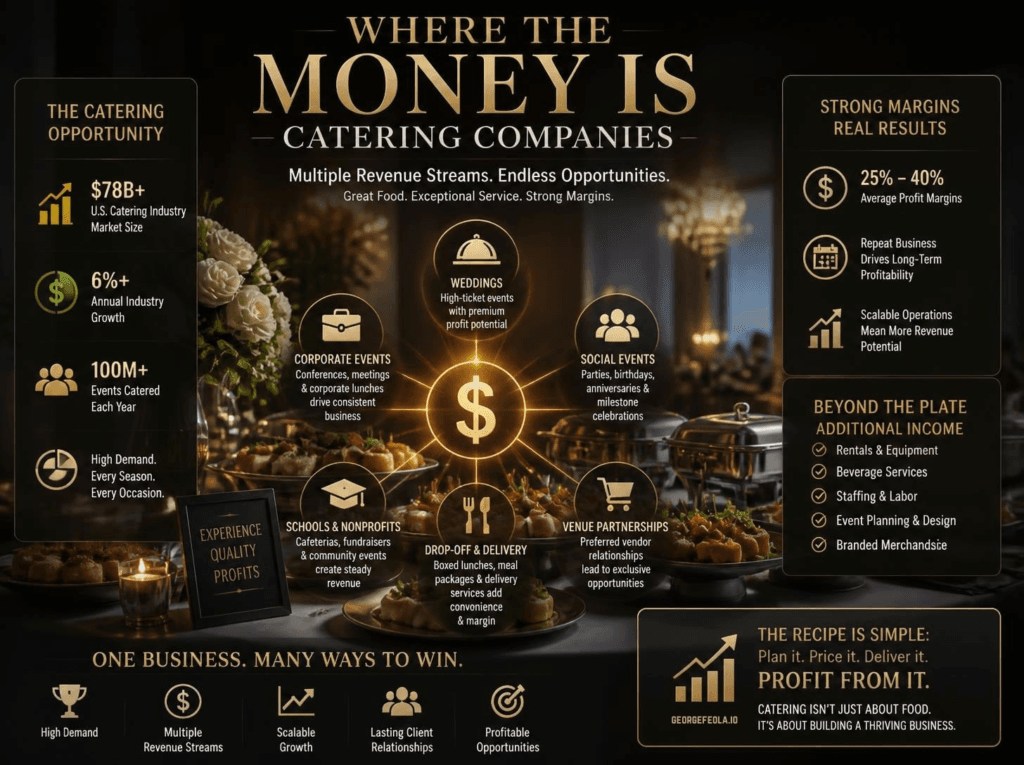
Typical profit margin: about 7% to 10%, based on the type of service, menu, price, food cost, labor cost, travel, waste, and control of each job.
FLIP reports that the average catering profit margin was about 7% to 8% in 2023. Some strong firms may earn more. Others may earn less.
Source: FLIP Catering Industry Statistics
A $5,000 event may sound like a great sale. But a large sale does not always mean a large profit.
Food may cost more than planned. Staff may work more hours. The site may be hard to reach. The caterer may need more ice, fuel, tables, trays, or tools.
The key is not how much the client pays.
The key is how much money is left after all costs are paid.
Costs That Can Hurt Profit
Food and labor are often the two largest costs.
The National Restaurant Association says food and labor each use about 33 cents of every sales dollar in a typical restaurant. Catering is not the same as a restaurant. Still, it faces many of the same cost risks.
Source: National Restaurant Association Cost Data
Labor may include cooks, drivers, servers, bar staff, and cleanup staff. The true labor cost is more than the wage. It may also include tax, overtime, insurance, and training.
Travel can also cut into profit.
A small order may take almost as much time to deliver as a large order. The driver must load the food, drive to the site, unload it, and return.
Late changes can also cost money. A client may add more guests. They may change the meal or move the event time.
Each change can add food, time, and labor.
Good caterers protect the business with clear rules. They may use:
- Deposits
- Order minimums
- Delivery fees
- Final guest-count dates
- Written rules for late changes
These rules help guard the profit on each job.
Corporate Catering Can Be Strong
Corporate catering can be one of the best parts of the business.
Companies buy food for meetings, staff events, sales calls, training, and office lunches. Many of these orders can repeat.
Recent data from ezCater shows strong demand. The firm said the average corporate order reached about $420. It also found that 56% of workplace food buyers planned to spend more in 2026.
Source: ezCater Corporate Catering Trends
Office buyers want good food. But they also want ease.
They want the meal to arrive on time. They want each item to have a clear label. They may need meat-free meals or meals made for special food needs.
They also want a fast and simple way to order.
This means the best sales message may not focus on the menu alone.
A line such as “Office meals that arrive on time” may be more useful than a long list of food.
Weddings and Social Events
Weddings and private events can bring in large sales.
Clients may also buy drinks, sweets, staff, tables, and better menu items. These extras can raise the sale.
But these events can also take more time.
The client may want a tasting. They may ask for changes. The caterer may need to work with a venue, planner, florist, and rental firm.
The price must cover this work.
Clear packages can help.
A basic package may include food, drop-off, and buffet setup. A mid-level package may add staff and more menu choices. A top package may add drinks, rentals, full service, and cleanup.
The client gets clear choices.
The caterer gets more control over cost.
Contract Catering
Schools, health groups, public offices, senior groups, and large firms may need meals on a set plan.
These accounts can bring steady sales. They may also help fill slow days.
But they may come with strict rules. The caterer may need proof of insurance, food safety files, meal details, set drop-off times, and a written deal.
The profit on each meal may be lower. But the steady amount of work may still make the account worth keeping.
The right question is not just:
How large is the contract?
The better question is:
Does the contract fit the business and make a fair profit?
Capacity Matters
A sales plan can work too well.
That may sound like a good thing. But too much work can hurt the company.
The caterer may not have enough cooks, drivers, vans, ovens, or serving gear. When the staff takes on too much, the quality may fall.
Capacity is not just about food.
Someone must answer the phone. Someone must send the quote. Someone must follow up. Someone must take the deposit and plan the job.
The time of year also matters.
The caterer may already be full on summer weekends. But it may need more office meals, winter events, or weekday jobs.
A smart campaign fills the open space on the calendar.
It should not bring more demand for dates that are already full.

How Clients Pick a Caterer
Clients want proof.
They read reviews. They look at photos. They check menus, prices, and service areas.
They also want to know what it is like to work with the firm.
Good reviews may talk about fast replies, kind staff, clean setup, and on-time delivery. These points may matter as much as the taste of the food.
The website should also answer basic questions.
Does the firm have a small-order limit? How far will it travel? How soon should a client book? Can it provide staff? Can it meet special food needs?
Fast follow-up can also win the sale.
Many clients call more than one caterer. The first firm to give a clear reply may have the best chance to get the job.
A Good, Better, Best Marketing Plan
A Good plan helps the caterer reach people who are ready to buy.
It may include:
- A clear website
- A strong Google Business Profile
- Good reviews
- Local SEO
- Paid search
A Better plan also builds brand awareness.
It may add radio, social media, email, streaming audio, or online video.
A Best plan builds trust, finds active buyers, and stays in front of them while they decide.
It may use radio or TV, search, social media, email, online ads, and ties with local venues.
The message should focus on the best type of work.
That may be office meals, weddings, buffets, school meals, memorial meals, or holiday events.
Third-party costs will change based on the market, media price, ad plan, and vendor fees.
Catering Discovery Questions for Marketers
Before you build a campaign, ask:
- Where does the company make its best money?
- Which clients are worth the most?
- How much new work can the company take?
- When does the company need more sales?
- What happens when a lead comes in?
- What is the usual sale and the best sale?
- Do repeat clients drive the business?
- What does the company want to be known for?
- What proof helps a client trust the firm?
- What result will show that the campaign worked?
These questions link the ad plan to the real needs of the business.
Conclusion
The money in catering is not just in selling more food.
It comes from the right clients, the right jobs, fair prices, and good cost control.
Office catering can bring repeat sales. Weddings can bring large sales. Contract work can bring steady sales.
Each type of work has its own cost and risk.
The best marketing plan starts with one clear rule:
Promote the work the company wants most and can serve well.
That is where smart marketing meets smart business.
Frequently Asked Questions
What is a normal catering profit margin?
A fair guide is about 7% to 10%. The true rate will change based on food, labor, travel, price, waste, and job type.
Which type of catering can make the most money?
Repeat office meals, drop-off meals, buffets, and boxed lunches can work well. Large events may also earn good profit when they are priced the right way.
Why are office clients so useful?
They may order many times each year. This cuts sales time and makes the work easier to plan.
What should a caterer promote first?
It should promote the service that has demand, open space, fair profit, and a clear edge over other firms.
How should the firm track results?
Track leads, reply time, quotes, booked jobs, sale size, profit, repeat sales, and referrals.
Subscribe for marketing and tech tips