
Google Is the First Touchpoint. AI Is the New Filter
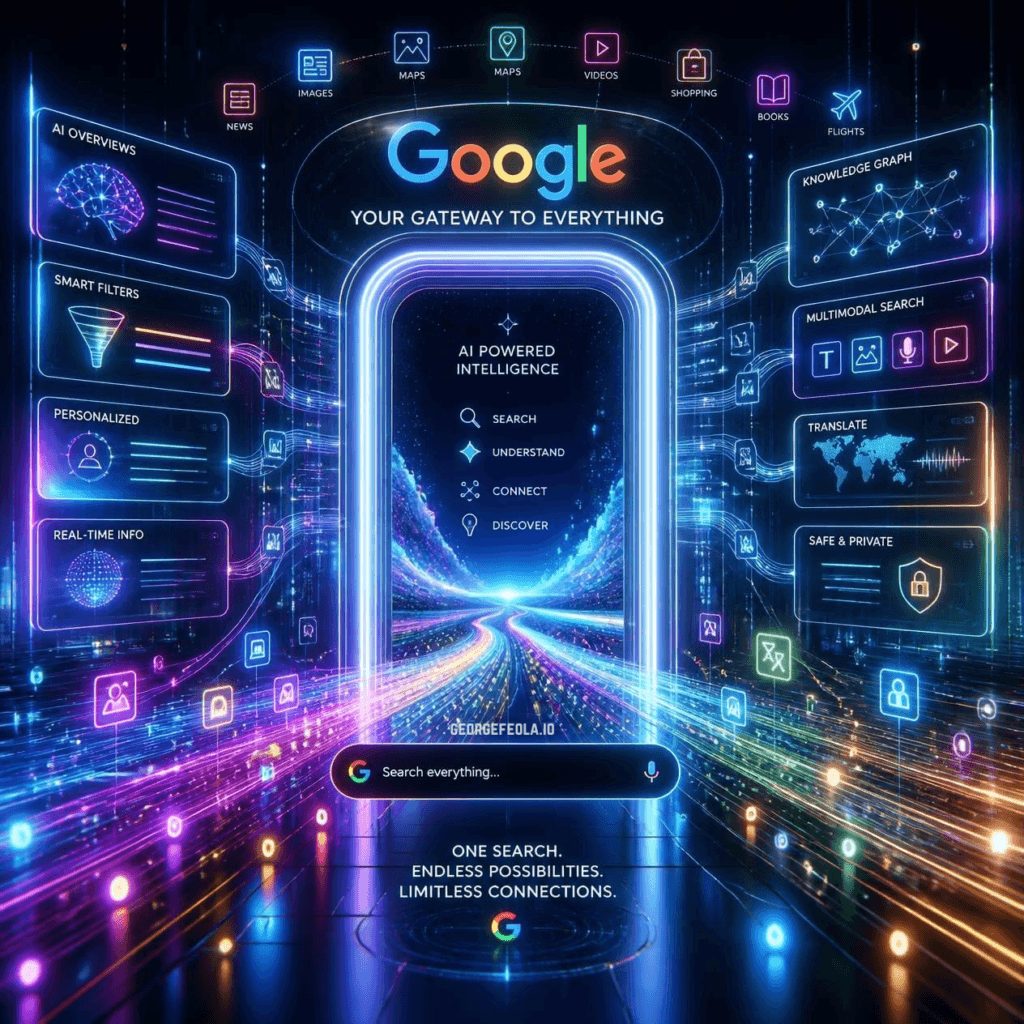
Google Is the First Touchpoint. Before customers call, visit, or talk to your sales team, they usually search. They check your Google listing, read reviews, scan photos, visit your website, and compare options. Now artificial intelligence (AI) is adding another layer by helping buyers sort choices faster. That means your business must be easy to find. It should be clear to understand. It also needs to be strong enough to trust before the first conversation ever happens.
The first time a customer meets your business may not be when they call. It might not be when they walk in or talk to your sales team either. It probably happens earlier. They hear your name, see your ad, get a recommendation, or notice your truck on the road. Then they do what most people do now: they search. They check Google. They scan reviews and look at photos. They visit your website and compare competitors. They may even ask an artificial intelligence (AI) tool for a recommendation. That is why Google is still the first touchpoint, and AI is becoming the new filter.
This is a big shift for local businesses. For years, many companies thought the sales process started when a prospect made contact. That is no longer the full story. The buyer is already forming an opinion before your phone rings. They are deciding whether your business looks active, trustworthy, current, and easy to work with. BrightLocal’s 2026 Local Consumer Review Survey reports that 97% of consumers read online reviews for local businesses. Additionally, 41% say they always read reviews when browsing for businesses. That means your public reputation is not sitting on the sidelines. It is right in the middle of the buying process.
Google Is the First Place Buyers Check
Think about your own behavior. If someone recommends a restaurant, contractor, jeweler, doctor, or retirement community, do you call immediately? Probably not. You search first. You want to see if the place looks legitimate. You check the hours. You look at photos. You read a few reviews. You may compare two or three similar businesses. In your mind, you are already narrowing the list before anyone gets a chance to sell you.
That is exactly what your customers are doing. Your Google Business Profile is now part of your sales team. Your website is part of your sales team. Your reviews are part of your sales team. Your photos, service descriptions, map listing, and even your response to reviews all shape confidence. If those signals are strong, the customer feels safer moving forward. If they are weak, the customer may never call. They will not send you a note saying, “Your profile looked outdated, so I chose someone else.” They will just disappear.
Businesses need to stop treating Google as a technical task. They should start treating it as a customer-facing sales environment. A messy Google presence is like a messy front lobby. It may not mean your business is bad, but it makes people wonder. If the hours are wrong, the photos are old, or the reviews are ignored, the customer starts to hesitate. If the website link leads to a confusing page, the customer hesitates more. That hesitation is dangerous because the next competitor is only one search away.
Why Google Is the First Step Before the Sales Call
Google still matters because it connects several important customer actions in one place. A buyer can search, compare, and call. They can get directions, read reviews, and check hours. They also have the ability to view photos and visit your website without much effort. That makes it the local front door for many buying decisions. Even when AI becomes part of the process, Google stays closely connected to local discovery. It does so through search, maps, business profiles, and reviews.
Google is also changing. The company announced a new era for AI Search in May 2026. It includes an AI-powered search box. There are also new features that let people ask more complex questions. Google described this as the biggest upgrade to its search box in more than 25 years. That matters because search is moving beyond short keywords and into longer, more natural questions.
So the question is not whether Google or AI wins. The more important question is this: what happens when Google and AI collaborate? They judge your business before a customer contacts you. That is the new reality. A customer may still start on Google, but the search experience is becoming more guided, summarized, and conversational. If your business information is thin, outdated, or unclear, you become harder to recommend.
Where AI Changes the Buyer Journey
AI changes the buyer journey. People are no longer limited to basic searches like “plumber near me” or “Mexican restaurant Medford.” They can ask detailed questions in plain English. Google has observed that in AI Mode, people bring more complex queries directly into Search. These queries have more specifics and detail than a traditional keyword search. For example, instead of searching “Nashville restaurants,” a person might ask for activities with friends. They might seek suggestions for food, music, and a more relaxed vibe.
That behavior will affect local businesses in every category. A customer might ask, “Who is the best HVAC company for emergency repair with good reviews?” Another might ask, “Which retirement community near me feels active but not overwhelming?” Someone else may ask, “Where can I get a meaningful anniversary gift under $500 from a local jeweler?” These are not just searches. They are mini buying conversations.
This means businesses must explain themselves better online. Generic language will not be enough. Saying “quality service you can trust” does not answer much. Clear content does. Who do you help? What problems do you solve? Where do you serve? What makes you different? What should a customer expect next? AI needs useful information to understand and summarize your business. Customers need the same thing to feel confident.

What Local Businesses Need to Fix First
The good news is that local businesses do not need to panic. You do not need to chase every AI tool or rebuild your entire marketing plan overnight. Start with the basics because the basics are what customers see first.
First, search your own business like a customer. Search your business name. Search your category plus your city. Search your top service plus your city. Do this on desktop and mobile. Look at what appears before you click anything. Is your business easy to find? Are the hours correct? Are the photos current? Are reviews recent? Does your website support the promise you are making in your advertising?
Second, fix your Google Business Profile. Make sure your business name, address, phone number, hours, website link, services, categories, and photos are accurate. Add strong photos that show your business in a real and useful way. A restaurant should show food, atmosphere, and seating. A contractor should show completed work. A retirement community should show living spaces, activities, dining, and warmth. A jeweler should show gift ideas, service areas, and real examples of what shoppers can expect.
Third, improve your website content. Your website should answer real buyer questions. If you are a contractor, explain your services, service area, process, common repair issues, and how estimates work. If you are a restaurant, show menus, hours, specials, private dining, catering, and online ordering. If you are a retirement community, explain lifestyle fit, care levels, tours, family questions, and next steps. The goal is not to write more just for the sake of writing. The goal is to remove doubt.
The New Local Visibility Stack
A strong local visibility plan has three layers: Google, website content, and proof. These layers work together. Google helps customers find and compare you. Your website explains why they should choose you. Proof helps them believe you.
| Visibility Layer | What It Does | What to Fix First |
|---|---|---|
| Google presence | Helps buyers find, call, compare, and visit | Profile, hours, photos, services, reviews |
| Website content | Explains your value and answers questions | Service pages, location pages, clear calls to action |
| Proof | Builds trust and lowers risk | Reviews, testimonials, photos, examples, local credibility |
This stack matters because customers do not move in a straight line anymore. Google’s consumer journey research describes modern behavior around streaming, scrolling, searching, and shopping. In plain English, people bounce between media. They shift between search, social content, websites, and shopping actions. They do not follow a neat sales funnel.
That is why every campaign needs a next step. If your radio ad creates interest, the customer may search you. If your TV ad creates awareness, the customer may check reviews. If your social post gets attention, the customer may visit your website. If your digital ad gets a click, the landing page must confirm the offer. Your marketing cannot stop at attention. It has to help the customer move from interest to trust.
How Radio, TV, and Digital Work Together Now
Radio and TV still matter. In fact, they may matter more when they are connected to search. Broadcast creates memory. Search captures intent. AI helps filter choices. Your website confirms trust. When those pieces work together, the customer journey feels natural.
A local business should not think of radio, TV, and digital as separate boxes. The customer does not experience them that way. A person may hear your radio ad in the morning. They might see your connected television (CTV) ad at night. The next day, they search your business and read reviews. They then visit your website and finally call. That is one journey, even if the media plan uses several channels.
For example, a home services company running radio should make sure the promoted service has a clear website page. A restaurant promoting slow-night specials should make sure Google hours, menu links, photos, and offer details are current. A senior living community running TV should send interested families to a page that explains tours, lifestyle, care options, and family decision questions. The ad creates the spark. Search and proof keep the spark from going out.
A Simple 30-Day Execution Plan
Here is a simple plan any local business can use.
Week one: Search your business like a customer. Write down what looks strong and what creates doubt. Check Google, maps, reviews, website links, mobile experience, and competitor comparisons.
Week two: Fix your Google Business Profile. Update hours, services, categories, description, photos, and review responses. Make sure the phone number and website link work correctly.
Week three: Improve one high-value website page. Choose the service or offer most likely to drive revenue. Add clear answers, proof, photos, service area details, and a strong call to action.
Week four: Connect your advertising to search behavior. If you are running radio, TV, social, or digital ads, make sure the customer’s next search confirms the message. Track calls, clicks, direction requests, forms, and common customer questions.
This plan is not complicated, but it is powerful. Most local businesses do not need more random marketing activity. They need a cleaner path from discovery to trust.
Conclusion
Google is still the first touchpoint for many local business decisions, but AI is becoming the new filter. That means customers are not just finding businesses. They are comparing, questioning, summarizing, and validating them before they ever call. Your sales team still matters, but it may not get the chance to sell if your digital presence creates doubt first.
The businesses that win in this new era will be the ones that are easy to find, easy to understand, and easy to trust. They will keep their Google presence current. They will write website content that answers real questions. They will build review habits. They will connect radio, TV, and digital campaigns to search behavior. The goal is simple: when a customer checks you online, everything they see should make the next step feel easier.
Next in the series: How local businesses can turn search behavior into better radio, TV, and digital campaigns.
Subscribe for marketing and tech tips at georgefeola.io
FAQs
Is Google still the first touchpoint, or is AI replacing it?
Google is still the first touchpoint for many local business searches. AI is changing how people ask questions and compare options, but Google remains central because of search, maps, reviews, business profiles, and local information.
What should a local business fix first?
Start with your Google Business Profile. Make sure your hours, phone number, website link, categories, services, photos, and reviews are current. Then improve your most important website pages.
How does AI affect local SEO?
Artificial intelligence affects local search engine optimization (SEO) by encouraging longer, more detailed questions. Businesses need clear content, strong reviews, complete profiles, and consistent information so AI and search tools can understand them.
Do radio and TV still matter in this new search era?
Yes. Radio and TV create awareness and memory. The key is connecting that awareness to Google, reviews, website content, and digital follow-up so customers can validate the message before they call.
What is the easiest way to start?
Search your business like a customer. Look at what appears on Google, maps, reviews, and your website. Fix anything that creates confusion or doubt. Then build one strong page around your most important service or offer.
Subscribe