
Where Customers Come From: TV, Radio, Search, Social
Introduction
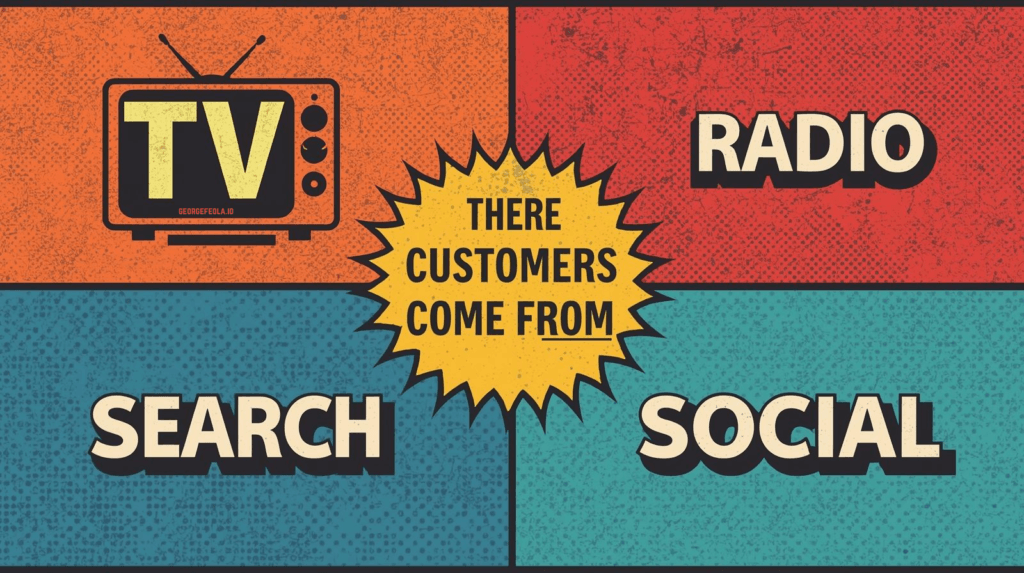
For legacy television and radio professionals transitioning into modern marketers, understanding where customers come from today is foundational. Audiences no longer encounter brands through a single medium. Instead, customers discover and engage with businesses across a blend of traditional and digital channels, including television, radio, search engines, and social platforms. Modern marketing is not about replacing one channel with another — it’s about integrating them into a cohesive strategy that meets customers where they are. Improvado+1
What Is a Customer Acquisition Channel?
A customer acquisition channel is any point at which a potential customer first encounters your brand. This can occur through traditional media such as TV and radio, digital media like search engines and social platforms, or even hybrid interactions across channels. These channels form the pathways that guide prospects from awareness to engagement and eventually to purchase. Dripify
Channels are not isolated silos. Today’s marketing environment emphasizes omnichannel integration — a seamless experience where customers might see a TV spot, search online, engage on social media, and then convert through a digital call to action. Improvado

Television: Broad Reach and Brand Builder
Television remains one of the most powerful traditional channels for initiating customer discovery. It delivers wide audience reach and strong brand credibility, helping companies build awareness at scale. When executed strategically, TV ads can stimulate online search activity and social engagement — a phenomenon often called the halo effect. Fall Off The Wall
Key roles TV plays in modern customer pathways:
- Introducing your brand to new audiences at scale
- Driving recall that increases search queries online
- Supporting other channels by building trust before deeper engagement
For legacy TV professionals, this strength is not obsolete — it is a competitive advantage when aligned with digital responses. Fall Off The Wall
Radio: Local Engagement and Frequency
Radio continues to serve as a cost-effective channel — especially for local businesses — that delivers frequency and relevancy within specific geographic markets. Like TV, radio can spark awareness that leads to digital interactions, such as searches or visits to social profiles and websites. Planday
What radio brings to modern acquisition:
- Consistent audience contact in commute and daily routines
- Localized messaging that drives niche discovery
- Layered frequency to reinforce other channel messages
When coordinated with digital follow-up (e.g., hashtags, URLs, calls to action), radio amplifies broader marketing performance. Planday
Search: Intent-Driven Discovery
Search engines — primarily Google and Bing — represent the intent edge of modern customer acquisition. When prospects actively look for solutions, your presence in search results determines whether they discover your brand. Search includes:
- Organic search engine optimization (SEO)
- Paid search advertising (pay-per-click campaigns)
Together, these allow brands to meet customers at the exact moment they seek information or a solution, making search one of the most measurable and direct acquisition channels available. Dripify
Social: Engagement and Targeted Reach
Social platforms like Facebook, Instagram, TikTok and LinkedIn combine audience precision with community interaction. Social media serves both brand discovery and engagement, allowing marketers to tailor messages to specific demographics and interests. Dripify
Social channels are powerful not only for reaching customers but for getting customers to interact with your brand content, share it with their networks, and follow deeper paths into search and conversion steps.
How These Channels Work Together
In today’s landscape, no single channel is sufficient on its own. Effective strategies intertwine traditional and digital touchpoints in ways that reflect how real customers behave. For example:
- A TV viewer might see an ad, then search online for more information.
- A radio listener might follow a station’s social posts to engage deeper.
- A social ad might prompt a search visit or a direct visit to your website.
This layered approach creates multiple opportunities to meet prospects at different stages of their journey, enhancing overall acquisition performance. Improvado
Conclusion
Customer pathways have diversified. Legacy channels like television and radio still matter, but they now operate within a larger ecosystem that also includes search engines and social platforms. The modern marketer’s task is to understand how these channels interact and how to orchestrate them to guide prospects from first impression to conversion.
For legacy TV and radio professionals, the evolution is not abandonment — it’s integration. Leveraging your deep understanding of traditional media with savvy digital practices positions you to attract and convert customers more effectively than ever. Improvado
Subscribe for Marketing and Tech Tips