

Where the Money Is: Convenience Stores
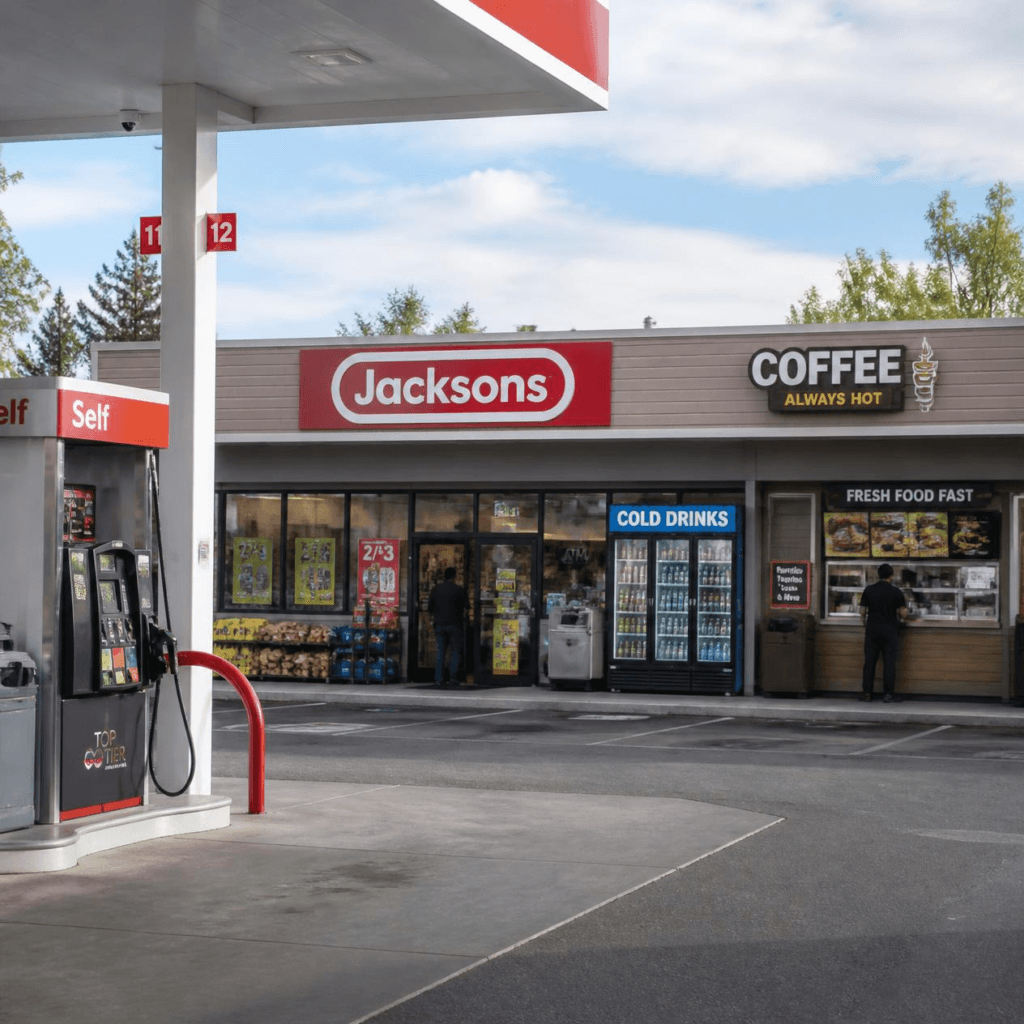
Convenience stores look like a simple business from the road: gas, coffee, cold drinks, snacks and something quick to eat.
But the money tells a more interesting story.
Fuel brings in enormous sales, but it is a thin-margin business. Much of the stronger profit opportunity is inside the store, where prepared food, beverages, snacks and repeat visits can make each customer far more valuable.
That is where the money is in convenience stores: not simply in sales, but in margin, frequency and the value of each visit.
Gas Brings the Customer, but the Margin Is Thin
Gasoline dominates convenience-store revenue, but sales volume can be misleading.
Current gasoline prices are running at roughly $4 per gallon nationally, with prices considerably higher across much of the West Coast. You can see current prices from the American Automobile Association (AAA).
At those prices, a busy station can generate impressive revenue. But the retailer keeps only a small portion of each fuel sale.
The National Association of Convenience Stores (NACS) reported an average gross fuel margin of 39.7 cents per gallon in 2025. That sounds healthy until you account for the costs of actually selling the fuel.
NACS estimates those direct expenses at roughly 20 to 25 cents per gallon, including card fees, distribution and other costs. After those expenses, the retailer may have roughly 15 cents per gallon left before the remaining costs of running the store.
At gasoline prices of $4 to $5 per gallon, that puts the usable fuel margin at roughly 3% to 4%.
So gas may generate huge sales, but it does not necessarily generate huge profit.
What $100 in Sales Really Means
The difference becomes much easier to see when we compare $100 in sales.
| Category | Approximate Margin | Dollars Remaining From $100 Sale |
|---|---|---|
| Fuel after typical fuel-selling expenses | 3%–4% | $3–$4 |
| Grocery and general merchandise* | 35.8% | About $36 |
| Prepared food and dispensed beverages* | 58.6% | About $59 |
*The merchandise and food figures come from Casey’s General Stores’ fiscal 2026 filing with the U.S. Securities and Exchange Commission (SEC). They are Casey’s results, not universal industry margins.
This comparison gets directly to the economics.
At a 4% margin, a store needs about $1,500 in additional fuel sales to produce $60 before its remaining operating expenses.
At a 58% prepared-food margin, just over $100 in additional food sales can produce roughly the same gross dollars.
That is why revenue alone does not tell us where the opportunity is.
The better question is: How much of the next sales dollar stays in the business?
Foodservice Is Where Things Get Interesting
Prepared food has become one of the most important profit centers in convenience retail.
Pizza, chicken, breakfast sandwiches, burgers, baked goods and grab-and-go meals have moved well beyond the old stereotype of gas-station food.
NACS reports that foodservice represented about 28% of inside-store sales in 2025, but produced more than 38% of inside-store gross profit dollars.
The actual margins help explain why.
Casey’s, one of the country’s largest convenience-store operators, reported a 58.6% margin before other operating expenses on prepared food and dispensed beverages in fiscal 2026.
That means a $10 prepared-food sale at a similar margin leaves nearly $6 after the direct cost of the food. That money still has to help pay labor, rent, utilities and other operating costs, but it provides considerably more room than a $10 fuel sale.
Food also creates an entirely different kind of customer visit.
You may need gasoline once a week.
You need to eat several times a day.
A strong breakfast, lunch or pizza business can bring customers into the store even when their gas tank is full.
Casey’s Shows the Difference
Casey’s provides a good real-world example because its public financial statements allow us to see how the categories compare.
In fiscal 2026, prepared food and dispensed beverages produced a 58.6% margin before other operating expenses. Grocery and general merchandise came in at 35.8%.
Fuel showed a 14.1% gross spread before the substantial costs associated with selling it.
The company’s broader numbers tell the story even better.
Prepared food, beverages, grocery and general merchandise represented roughly 36% of Casey’s total revenue over the previous three fiscal years but about 63% of revenue less cost of goods sold.
Most of the revenue may flow through the gas pumps.
Much of the stronger margin comes from inside the store.
That is Where the Money Is in a nutshell.
Frequency Makes Small Purchases Valuable
Margin is only half the story.
The other advantage convenience stores have is frequency.
A customer might buy a $3 coffee four mornings a week. That is more than $600 a year from one small habit.
Add an occasional breakfast sandwich, energy drink or snack and the value of that customer rises quickly.
Consider someone who spends $8 three times a week. Over 50 weeks, that customer represents about $1,200 in annual sales.
Raise the average transaction from $8 to $10 and the same customer is now worth about $1,500 a year.
That is why coffee, cold drinks, snacks and loyalty programs matter so much. None of those purchases needs to be large if the customer keeps coming back.
The individual transaction may be small.
The annual relationship is not.
The Basket Matters Too
Convenience stores also benefit from something retailers call the basket — everything a customer buys during one visit.
The fuel customer comes inside for coffee.
The coffee customer adds breakfast.
The pizza customer grabs a drink.
The energy-drink customer adds jerky.
An extra $2 or $3 does not sound like much. But multiply it across hundreds of transactions each day and 365 days a year, and the numbers become meaningful.
This is one of the strengths of the convenience-store model.
The store does not always need another customer.
Sometimes it simply needs to make the existing visit worth a little more.
Small Operators Still Matter
Convenience retail is not limited to giant national chains.
The latest NACS and NielsenIQ (NIQ) Convenience Industry Store Count puts the number of U.S. convenience stores at roughly 152,000.
About 63% are operated by companies with 10 stores or fewer.
Independent and regional operators therefore remain a major part of the business.
They may not have the purchasing power of a huge chain, but they can compete through food, coffee, cleanliness, speed, local products and customer loyalty.
A store does not have to be the biggest if people have a reason to choose it.
Where the Money Really Is
Gasoline is essential to convenience stores, but the revenue numbers can fool you.
At today’s $4 to $5 gasoline prices, fuel can generate enormous sales while leaving only roughly 3% to 4% after the typical direct costs of selling it.
Inside the store, the economics can be dramatically different.
Prepared food can approach a 60% gross margin in a successful operation such as Casey’s. Grocery and general merchandise can be in the mid-30% range. Coffee, drinks and snacks create repeat purchases and increase the value of visits that were already going to happen.
That is the key distinction.
Fuel creates traffic. Margin lives inside.
A convenience store does not necessarily need to sell more of everything.
It needs to sell more of the things that leave enough money behind.
And that is where the money is.
Frequently Asked Questions
How much does a convenience store make on gasoline?
NACS reported a gross fuel margin of about 39.7 cents per gallon in 2025, but retailers typically face another 20 to 25 cents per gallon in direct selling expenses. That can leave around 15 cents per gallon before the remaining costs of running the store. At $4 to $5 per gallon, that is roughly a 3% to 4% usable margin. See the NACS fuel economics.
What has one of the strongest margins in a convenience store?
Prepared food can be one of the strongest categories. Casey’s reported a 58.6% margin before other operating expenses on prepared food and dispensed beverages in fiscal 2026.
Why is foodservice so important?
It combines stronger margins with additional customer visits. Customers need gasoline occasionally, but food creates opportunities throughout the day.
Why do coffee, drinks and snacks matter?
They create repeat purchases and increase the size of each visit. Small purchases become valuable when the same customer makes them several times every week.
Can independent convenience stores still compete?
Yes. About 63% of U.S. convenience stores are operated by companies with 10 locations or fewer, so independent and regional operators remain a major part of the industry.
Subscribe for Marketing and Tech news