

Coffee Shop Profits: Where the Money Really Comes From
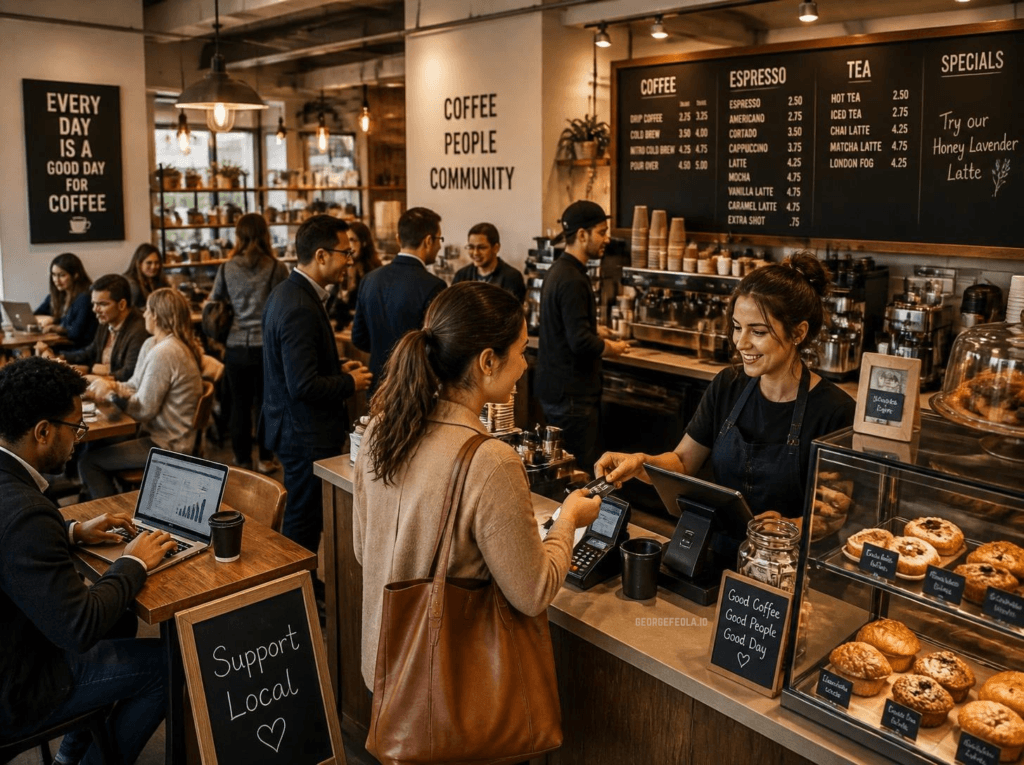
Coffee shops sell one of the most familiar products in America, but the business behind the cup is more complicated than it looks.
From the customer’s side of the counter, the math seems almost too good to be true. Hot water, ground coffee and a paper cup become a $4 purchase. Add milk, flavoring and espresso, and that same transaction may climb to $6 or $7.
Yet coffee-shop owners know that a strong markup on a latte does not automatically produce a healthy profit. Rent, payroll, equipment, credit-card fees, utilities and food waste can quickly consume the money left after the ingredients are paid for.
So, where is the money in coffee shops? It is not simply in selling coffee. The real opportunity is in customer frequency, premium beverages, food add-ons, convenience and loyalty.
Americans Have a Strong Coffee Habit
Coffee shops begin with an enormous advantage: Americans already love the product.
The National Coffee Association reports that roughly two-thirds of American adults drink coffee each day, while more than 70% drink it during an average week. American consumers collectively spend more than $300 million on coffee products every day, or nearly $110 billion annually.
Specialty coffee has also moved well beyond being a niche product. According to National Coffee Association specialty-coffee research, 46% of American adults reported drinking specialty coffee during the previous day, compared with 42% who drank traditional coffee.
That is a large pool of customers making frequent purchasing decisions. Unlike a furniture store or automobile dealership, a coffee shop does not need to wait several years for the customer to return. A good customer may come back tomorrow—or later the same day.
That frequency is the foundation of the business.
The Money Is in the Premium Beverage
Plain brewed coffee can be profitable, but specialty drinks give coffee shops more room to increase the average sale.
A customer may hesitate to pay substantially more for an ordinary cup of coffee. That same customer may willingly pay a premium for a caramel cold brew, seasonal latte, energy drink, flavored tea or customized espresso beverage.
These drinks create a product that is harder to compare by price. They also give customers a reason to return and make upgrades feel like a natural part of the order.
An extra espresso shot, alternative milk, flavored syrup or cold foam may add only a small amount to the shop’s ingredient cost. Multiplied across hundreds of monthly transactions, however, those upgrades can produce meaningful revenue.
The growth of specialty coffee confirms that customers are interested in more than basic caffeine. The National Coffee Association reports that specialty-coffee consumption has increased significantly since 2011, with both espresso-based and non-espresso specialty drinks gaining popularity.
The lesson is simple: a coffee shop should not merely sell coffee. It should develop a few recognizable signature beverages that customers cannot buy in exactly the same form somewhere else.
Food Turns a Coffee Stop Into a Meal
The drink brings the customer through the door, but food can transform the transaction.
A customer who buys only a $5 latte creates one kind of sale. A customer who adds an $8 breakfast sandwich creates an entirely different one—and the shop did not have to acquire a second customer to generate that additional revenue.
This is why pastries, breakfast sandwiches, protein boxes and grab-and-go lunches matter. They allow the coffee shop to capture money the customer might otherwise spend at another business.
The strongest food items are not necessarily the most elaborate. Coffee shops should favor products that are easy to prepare, travel well and use ingredients shared with other menu items. A large menu may look impressive, but it can create slower service, extra training and greater waste.
Think of the menu like a radio playlist. Customers want variety, but too many weak selections dilute the brand and make the entire operation harder to manage.
The better approach is to identify a few food-and-beverage combinations that solve a specific customer problem: breakfast on the way to work, lunch without another stop or refreshments for an office meeting.
Convenience May Be More Valuable Than Atmosphere
Coffee shops are often associated with comfortable chairs, music and conversation. Those qualities still matter, but many customers simply want their drink quickly.
Drive-thru service, mobile ordering, online payments and efficient pickup can be just as important as the atmosphere inside the café. The National Restaurant Association’s research on off-premises dining shows that takeout and drive-thru purchases have become regular weekly habits for a substantial share of American adults.
A customer on the way to work is not buying only coffee. That person is buying back several minutes of the morning.
This helps explain the growth of drive-thru-focused coffee businesses. They may offer less seating than a traditional café, but they are designed to move vehicles and complete transactions quickly.
Independent shops do not have to copy national chains. They do need to remove unnecessary friction. A great drink loses some of its value when the customer waits too long, cannot find parking or arrives to discover that a mobile order has not been prepared.
Speed, consistency and convenience are part of the product.
Loyalty Converts Occasional Customers Into Regulars
The most valuable customer is rarely the person who makes one large purchase. It is the person who returns three or four times every week.
According to Square’s research on coffee-shop loyalty programs, a large majority of consumers say rewards programs make them more likely to continue doing business with a brand.
A loyalty program should do more than give away a free drink after ten purchases. It can also encourage profitable behavior.
A shop might provide bonus points during slower afternoon hours, reward purchases above a certain amount or promote a combination of food and beverages. The goal is to increase both customer frequency and transaction value.
The larger objective is to make the shop part of the customer’s routine. Once a customer automatically thinks of one location on the way to work, the business has built something competitors cannot easily take away.
Coffee Shops Have Revenue Beyond the Counter
A coffee shop does not have to wait for every customer to walk through the front door.
Catering, office delivery, meeting packages and recurring business accounts can create larger transactions outside the normal morning rush. A single office order may equal the revenue from several individual customers while requiring fewer separate payment transactions.
Additional opportunities include bags of whole-bean coffee, branded mugs, gift cards, subscriptions, event beverage service and partnerships with nearby employers.
These revenue streams also strengthen the brand. A bag of coffee sitting in a customer’s kitchen keeps the business visible long after the café visit ends.
Local partnerships can be especially effective. A real-estate agent could include a coffee card in a new-home package. A medical office might order coffee for staff meetings. A dealership could sponsor a customer-appreciation morning.
Coffee is easy to connect with hospitality, productivity and community. That makes it a flexible promotional product as well as a beverage.
Coffee-Shop Marketing Should Sell a Reason to Visit
Many independent shops rely almost entirely on social media. They post a photograph of a latte, announce the daily pastry and hope customers remember to stop.
That is activity, but it is not always a complete marketing strategy.
A stronger advertisement gives the customer a specific reason to visit: a seasonal beverage, breakfast combination, loyalty offer, new drive-thru service or afternoon promotion.
Coffee shops are naturally suited to local marketing because their trading area is usually limited. Radio, television, streaming audio, connected television, search and social advertising can all be targeted around the communities closest to the shop.
The message should answer a simple question: Why should someone pass another coffee shop to visit this one?
The answer might be faster service, locally roasted beans, unusual drinks, a better breakfast, community involvement or a comfortable place to meet. Without that distinction, the shop risks competing almost entirely on location and price.
Conclusion: The Business Is Built on Habit
Coffee shops operate in a large, active and emotionally familiar category. Americans drink coffee frequently, specialty beverages continue to grow, and customers are willing to pay for quality and convenience.
But a profitable coffee shop cannot rely on the apparent markup of one cup. It must manage labor, control waste, increase the average transaction and give customers a reason to return.
The greatest opportunity is not one expensive drink. It is the customer who buys a drink and breakfast today, returns three times next week, joins the loyalty program and eventually orders coffee for the office.
Coffee is the product.
Habit is where the money is.
Frequently Asked Questions
Are coffee shops profitable?
They can be, but product markup should not be confused with net profit. Payroll, occupancy, equipment, utilities, card-processing charges and waste can substantially reduce what remains after a drink is sold.
What products make coffee shops the most money?
Premium espresso drinks, cold beverages, add-ons and signature creations can provide attractive revenue opportunities. The exact profitability depends on ingredient cost, preparation time, pricing and waste.
How can a coffee shop increase its average sale?
The most direct strategies are pairing drinks with food, offering relevant upgrades, creating bundles and training employees to suggest additions naturally.
Do coffee shops need loyalty programs?
A well-designed program can encourage repeat visits and help the shop understand customer behavior. The rewards should promote profitable purchases rather than simply discounting products customers would have purchased anyway.
Should coffee shops advertise beyond social media?
Yes. Social media primarily reaches existing followers. Search, local broadcast, streaming media, email and community partnerships can introduce the business to customers who do not already follow its accounts.
Sources
- National Coffee Association — Economic Impact of Coffee
- National Coffee Association — Specialty Coffee Consumption Hits a 14-Year High
- National Restaurant Association — Off-Premises Restaurant Trends
- Square — Coffee-Shop Loyalty Program Tips